
Maple Ridge and Willow Park: What You're Actually Trading For
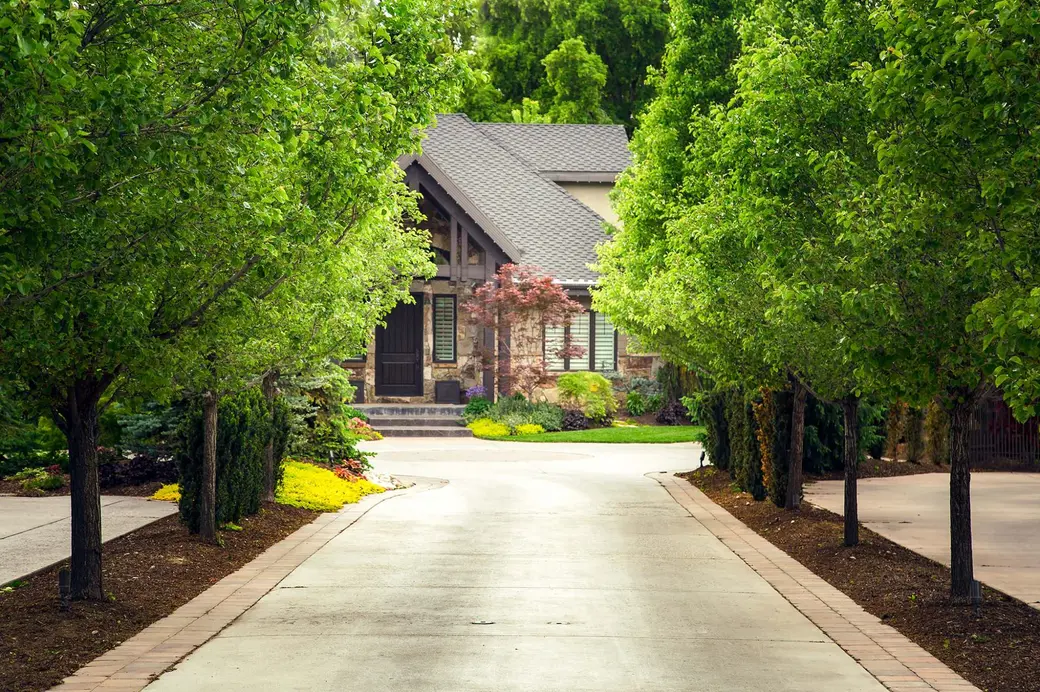
Some neighbourhoods are hard to explain if you only look at square footage, finishes, and bedroom count.
Maple Ridge and Willow Park are like that.
On paper, a buyer might look at an older home in one of these areas and start doing the obvious comparison. For the same money, could you get something newer somewhere else? Probably. Could you get more square footage? Maybe. Could you get a house that needs fewer updates right away? Quite possibly.
That is the trade-off.
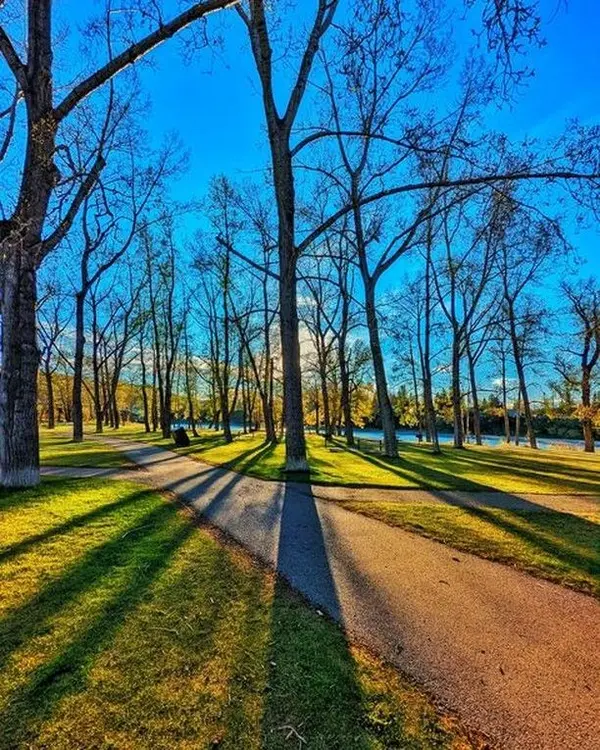
The people who are drawn to Maple Ridge and Willow Park usually are not just shopping for the biggest possible house. They are responding to something else. Mature trees. Bigger lots. Established streets. Parks. Schools. Access. A part of the city that feels settled instead of still being assembled.
And for the right person, that stuff matters.
What These Areas Have That Newer Communities Struggle to Fake
A lot of newer communities are built efficiently. That is not automatically bad. People need homes, and newer houses can be practical, warm, spacious, and lower maintenance.
But there is a difference between a neighbourhood that was built all at once and a neighbourhood that has had decades to settle in.
In Maple Ridge and Willow Park, you tend to feel that difference pretty quickly. The trees have size. The streets have shape. The yards often feel more usable. The homes are not all trying to be the same version of impressive. There is usually more variety, more breathing room, and more evidence that actual life has been happening there for a long time.
That is hard to recreate.
You can build a new house. You can plant new trees. You can design pathways, parks, playgrounds, and community features. Some of it can be very good.
But you cannot fast-forward 40, 50, or 60 years of neighbourhood maturity.
The Square Footage Trade-Off
This is usually one of the first things buyers have to wrestle with.
If you are coming from a newer suburban home, especially something built in the 2000s or later, an older home in Maple Ridge or Willow Park may feel smaller in certain ways. The ensuite may not be as big. The closets may not be as generous. The basement may not be finished the way you would design it today. The kitchen might not have the same open-plan drama.
That can be a real adjustment.
But square footage is not the whole story. It never has been.
Sometimes a smaller house on a better lot, on a better street, in a more established neighbourhood, gives you a better life than a larger house in a place that does not feel right anymore. That does not mean everyone should give up space for trees. It just means the comparison has to be honest.
A bigger house is only better if the extra space is solving the right problem.
If what you really miss is a yard, parking, trees, schools, walkability to useful things, access around the city, or just a neighbourhood that feels less stripped down, then square footage might not be the only number worth paying attention to.
Older Does Not Automatically Mean Money Pit
A lot of buyers like older homes until they start thinking about older-home costs.
Then the spiral begins.
What about the roof? What about the furnace? What about windows? What about sewer lines, grading, electrical, plumbing, Poly-B, permits, insulation, renovations, and whatever else might be hiding behind the drywall?
Fair questions.
Older homes need a different kind of attention. I would never tell a buyer to ignore that. A 1960s or 1970s home should be looked at differently than something built five years ago. The inspection matters. The renovation history matters. The mechanicals matter. The drainage and exterior maintenance matter. The boring expensive stuff matters.
But maintenance is not the same thing as disaster.
Some older homes have been cared for extremely well. Some newer homes have problems sooner than people expect. Age gives you clues, but it does not give you the whole answer.
What I care about is whether the house makes sense when you read it properly. Has it been maintained? Have the updates been thoughtful? Are the expensive systems at least understandable? Are you paying for real improvements, or just finishes that look good online?
That is the work.
The Renovation Question
In areas like Maple Ridge and Willow Park, you will see a mix.
Some homes are mostly original. Some have had careful long-term owner updates. Some have been renovated to sell. Some have had partial work done over time. Some are beautiful on the surface and still need a harder look underneath.
This is where buyers can get pulled around pretty easily.
A renovated older home can be fantastic. It can also be a little misleading if the money went mostly into the visible stuff. New kitchen, new bathrooms, fresh paint, nice lights, good photos. All of that can make a house feel finished.
But the better question is what the renovation was trying to solve.
Was it built for real living, or was it mostly built for resale? Did they fix layout problems, storage problems, lighting problems, exterior issues, mechanical issues, and the way the house actually functions? Or did they mostly make the home easier to market?
Neither answer automatically kills the deal. You just need to know what you are buying.
Stability Is Part of the Value
One of the reasons established neighbourhoods tend to hold attention is that they are harder to replace.
You can add more new communities at the edge of the city. You cannot easily create another pocket with mature trees, older lots, established schools, central-ish access, long-term owners, and decades of neighbourhood identity.
That scarcity is part of the value.
It also means the buy side can be more competitive when good homes come up. Not every listing, not every price point, and not every market. But when a well-located, well-cared-for home hits in an area people already understand, buyers tend to notice.
That can be frustrating if you are trying to get in.
The other side is that those same qualities can help on the selling side. Established areas with real neighbourhood appeal often have a more durable buyer pool. People are not only buying the house. They are buying the setting, the lot, the street, the access, the trees, and the feeling that they cannot quite find in newer areas.
Again, price still matters. Condition still matters. The market still matters.
But the neighbourhood is doing some work.
Who Maple Ridge and Willow Park Make Sense For
These areas probably make the most sense for people who are willing to trade some newness or square footage for a more established feel.
Maybe you are coming from a newer area and starting to feel like the house is fine, but the neighbourhood is not really doing it for you anymore. Maybe you want trees. Maybe you want a yard that feels more usable. Maybe you want schools, parks, streets, and homes that feel less like they were all created from the same spreadsheet.
Or maybe you have always liked older homes, but you need help sorting out what is charming, what is manageable, and what is going to become an expensive headache.
That is a normal place to be.
The goal is not to romanticize older homes. Some of them need too much. Some are overpriced. Some have been renovated badly. Some are going to ask more from you than you actually want to give.
But the goal also is not to scare yourself out of a good house just because it was built before every floor plan became enormous and every finish became a version of the same thing.
There is a middle ground.
What You Are Really Trading For
If you are looking at Maple Ridge or Willow Park, you are probably weighing more than a property.
You are weighing a type of life.
Less shiny, maybe. Less perfect, probably. Less maintenance-free, sure.
But possibly more grounded. More established. More spacious outside. More human in scale. More connected to the parts of Calgary that feel like they had time to become something.
That is not the right trade for everyone.
For some people, newer and easier is absolutely the better choice. Bigger closets, newer systems, less immediate updating, more house for the money. There is nothing wrong with wanting that.
But if you keep finding yourself pulled toward mature trees, older homes, quieter streets, bigger lots, and neighbourhoods that feel like they have a bit of soul, it is probably worth paying attention to that.
Sometimes the thing you cannot quite put on a spreadsheet is the thing you are actually trying to buy.
CTA:
If you are weighing an older Calgary home, a move into an established neighbourhood, or whether giving up some square footage might actually make sense, start with the 10-Minute Move Gut Check:
https://riglinrealty.ca/move-gut-check
It is a quick, low-pressure way to get a second set of eyes before the whole thing turns into a dog and pony show.
Recent Posts


Trying to make sense of a potential move?